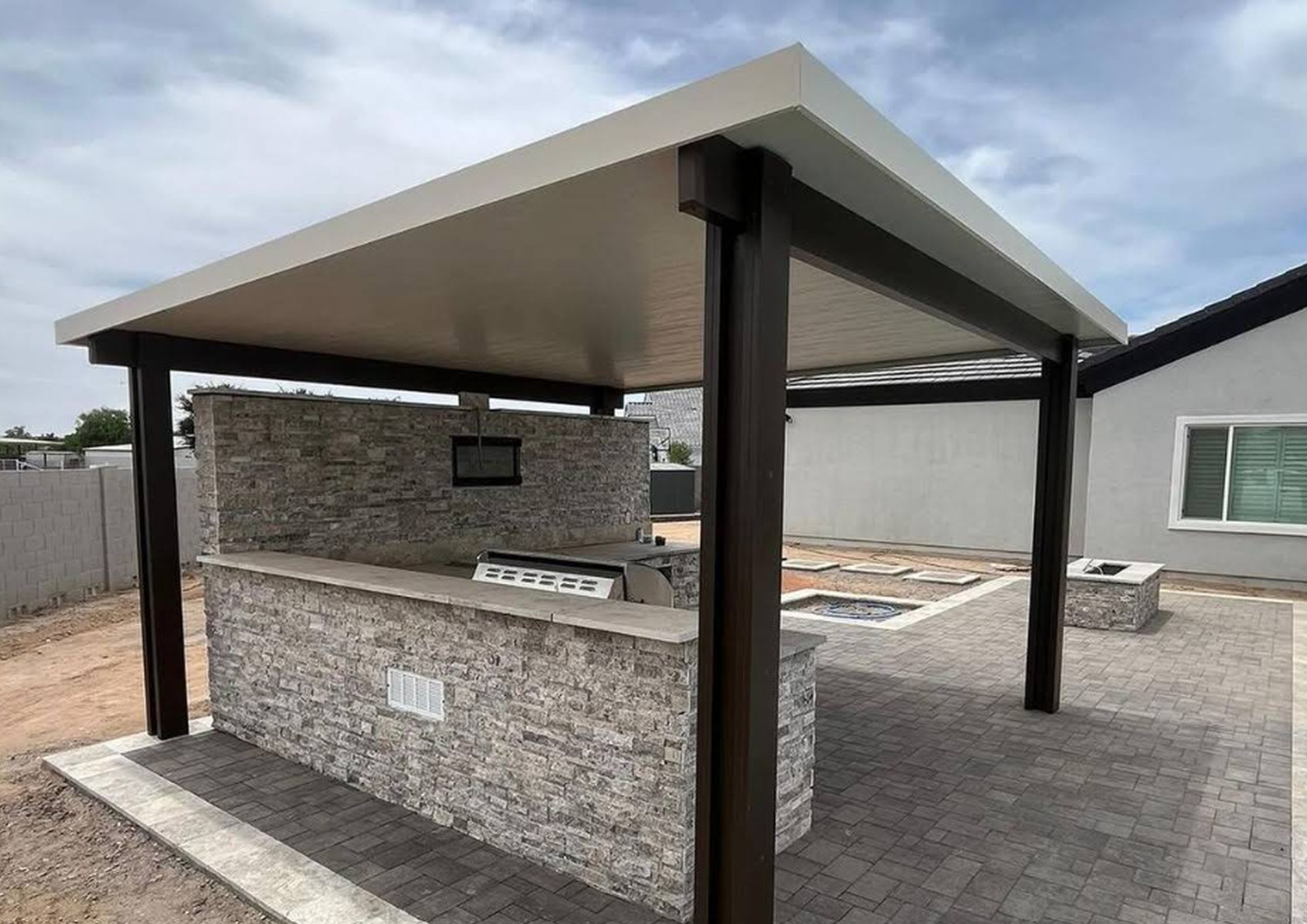
For homeowners considering a patio cover in Las Vegas, the choice between an attached patio cover and a freestanding patio cover can have a major effect on how the backyard is used. Both options can provide shade from the Southern Nevada sun, create a more comfortable outdoor living area, and give homeowners more opportunities to enjoy their property throughout the year.
The right choice depends on the layout of the home, the location of the patio, the position of the swimming pool or outdoor kitchen, available yard space, desired shade coverage, and how the property is used.
Las Vegas presents some demanding outdoor conditions. The region receives intense sunshine, very hot summers, low annual precipitation, and periods of strong wind. July normal temperatures at Harry Reid International Airport reach approximately 104°F for the daytime high and 80°F for the nighttime low, according to National Weather Service climate data.
A well-planned patio cover can make a patio, pool deck, dining area, or outdoor kitchen considerably more usable during the hottest part of the year. The key question is where that shade should be located and how the structure should relate to the home.
What Is an Attached Patio Cover?
An attached patio cover is connected directly to the house. It typically extends from the rear or side of the property over an existing patio, deck, outdoor kitchen, dining area, or entertaining space.
For many Las Vegas homes, this is the most natural location for a patio cover.
A homeowner can step directly from the kitchen, living room, family room, or bedroom into the covered outdoor area. Food, dishes, drinks, furniture cushions, and other household items can move between the house and patio without crossing an uncovered portion of the yard.
An attached patio cover can work particularly well for homeowners who spend most of their outdoor time close to the house.
It can provide shade over:
- Outdoor dining tables
- Grills and outdoor kitchens
- Patio furniture
- Sliding glass doors
- French doors
- Seating areas
- Entertainment areas
- Covered walkways
- Backyard gathering spaces
The structure can be coordinated with the home’s exterior colors and architectural style. For a homeowner who wants the backyard to feel like an extension of the home’s living area, an attached patio cover can be an effective choice.
What Is a Freestanding Patio Cover?
A freestanding patio cover is supported independently of the home. Posts and structural components support the cover without requiring a direct connection to the house.
This configuration gives homeowners more freedom to select the location.
A freestanding patio cover can be installed beside a swimming pool, toward the rear of a large backyard, near an outdoor kitchen, over a dedicated seating area, or in another location where shade is needed.
This can be especially useful in Las Vegas neighborhoods where the swimming pool is separated from the house by a substantial portion of the backyard.
Rather than placing shade immediately outside the rear doors, a homeowner can position the structure beside the pool. Lounge chairs, a dining table, an outdoor bar, or other furniture can be placed underneath it.
Las Vegas Heat Makes Patio Cover Placement Important
The Las Vegas climate should influence the placement of any patio cover.
A patio that receives direct afternoon sunlight can become extremely hot during summer. Concrete, pavers, furniture, walls, and other surfaces can absorb solar heat throughout the day.
A patio cover can block a significant amount of direct solar exposure, yet its effectiveness depends heavily on location, roof configuration, dimensions, and orientation.
For example, a homeowner may have a covered patio immediately outside the rear door but still have an uncovered swimming pool deck that receives direct afternoon sun. An attached cover could provide excellent protection near the house but leave the poolside seating area exposed.
A freestanding structure placed beside the pool may provide greater practical value in that situation.
The reverse can be true for a homeowner whose outdoor kitchen sits directly against the rear wall of the house. An attached patio cover may provide the most useful coverage without consuming additional yard space.
The position of the shade matters as much as the amount of shade.
Attached Patio Covers for Homes
An attached patio cover is often a strong option for homeowners who want a covered extension of the home’s existing living space.
Easy indoor-outdoor access
One of the biggest benefits is convenience. The patio is directly connected to the home, making outdoor dining and entertaining easier. A homeowner preparing dinner in the kitchen can step outside to the covered patio without crossing the yard. Guests can move between indoor and outdoor areas with fewer obstacles.
Efficient use of the backyard
An attached patio cover can make productive use of space that is already located beside the house. This can be helpful in neighborhoods with smaller lots or properties where the backyard contains a pool, landscaping, play area, or other features.
Excellent for outdoor kitchens
Outdoor kitchens are frequently placed near the home for convenient access to indoor cooking areas and utilities. An attached cover can create overhead protection for grills, counters, refrigerators, dining tables, and seating.
Shade near windows and doors
An attached structure can reduce direct sunlight reaching portions of the home’s exterior and outdoor openings. This can be especially useful for patios that receive intense afternoon sun.
Consistent architectural appearance
The patio cover can be planned around the roofline, exterior colors, doors, windows, and other features of the house. For homeowners seeking a unified appearance, this can make an attached structure an attractive option.
Freestanding Patio Covers for Homes
A freestanding patio cover offers greater freedom of placement. This is one of its biggest advantages for larger properties.
Poolside shade
Swimming pools are common features in Las Vegas backyards. A freestanding patio cover can create a shaded area beside the water without requiring the structure to connect to the house. This space could accommodate lounge chairs, a dining table, a bar, or a combination of seating options.
Separate outdoor zones
A large backyard can contain several distinct activity areas. One section might contain the swimming pool. Another might hold the outdoor kitchen. A third could become a quiet seating area. A freestanding patio cover can define one of these spaces without changing the footprint of the home’s existing patio.
Flexible placement
Homeowners can select a location based on sun exposure, existing landscaping, pool placement, furniture arrangement, and preferred views. That flexibility can be valuable in larger Las Vegas, Henderson, and Summerlin backyards.
Greater distance from the house
A freestanding structure can turn an unused section of the backyard into a functional destination. A walkway leading from the house to a covered seating area can create a separate outdoor retreat for dining, relaxing, entertaining, or poolside activities.
Attached vs. Freestanding Patio Cover
Homeowners face many of the same desert conditions found throughout the Las Vegas Valley. The best patio-cover configuration depends on the property. A home with a rear kitchen opening onto a compact patio may benefit from an attached patio cover. A property with a large backyard and swimming pool may have a better use for a freestanding patio cover.
Neighborhood layout matters, too. Some properties have substantial rear yards with pools and multiple outdoor activity areas. Others have compact patios where every square foot needs to serve a purpose.
The decision should be based on the way the property is actually used rather than selecting a structure solely by appearance.
Aluminum Patio Covers for the Las Vegas Climate
Material selection is another major factor. Wood can provide a traditional appearance, yet desert conditions can create maintenance challenges. Intense sunlight, temperature swings, dust, irrigation water, and occasional moisture can affect exterior materials over time.
Aluminum patio covers provide a low-maintenance option. Ultra Patios specializes in aluminum patio covers for Las Vegas and offers Alumawood and Elitewood systems, along with solid patio covers, lattice patio covers, combination solid-lattice designs, and insulated patio roof panels.
For a Las Vegas homeowner, the reduced maintenance associated with aluminum can be attractive.
The goal is not simply to install a roof over a patio. The structure should continue looking good and functioning properly through years of intense desert sun.
Solid vs. Lattice Patio Covers
The roof configuration can affect the amount of shade and weather protection a homeowner receives. A solid patio cover blocks direct sunlight across the covered area. This can be a good choice for outdoor dining, kitchens, lounge areas, and spaces where maximum shade is desired.
A lattice patio cover allows portions of sunlight through the roof. This produces filtered shade and maintains more of the open-air character of a backyard. A combination design can divide the roof into different sections.
For example, a homeowner might prefer solid coverage above an outdoor kitchen and dining table while using lattice coverage over another portion of the patio.
An insulated patio roof provides another option for homeowners focused on heat management.
Patio Cover Permits in Las Vegas and Clark County
Permitting should be addressed before construction begins.
Clark County states that building permits are required for free-standing and attached structures, including carports, shade structures, and patio covers. Zoning requirements can affect where a patio cover may be located on a property. This matters for both attached and freestanding patio covers.
A freestanding design should not be assumed to have fewer regulatory requirements simply because it is separate from the house. Setbacks, property lines, existing structures, lot configuration, height, structural design, and local jurisdiction can affect the project.
Homeowners in Las Vegas, Henderson, North Las Vegas, and nearby communities should confirm which jurisdiction governs their property and which requirements apply to their specific project.
Why Structural Design Matters in Southern Nevada
A patio cover must handle the environmental conditions of the location.
Las Vegas has very hot summers, intense solar exposure, occasional strong winds, and periodic thunderstorms. The National Weather Service notes that strong wind events can occur in the region, including during monsoon conditions. Connections, posts, beams, roof components, foundations, and attachment points all have a role in structural performance.
An attached patio cover introduces another consideration: the connection between the new structure and the existing home. That connection needs to be properly planned for the home’s construction and the patio-cover design.
A freestanding structure has its own structural requirements, including post locations, footings, anchorage, and resistance to wind forces. These factors make professional design and installation particularly useful for a permanent patio-cover project.
Which Patio Cover Is Better for a Las Vegas Pool?
For many pool owners, a freestanding patio cover deserves serious consideration.
A pool can occupy a substantial portion of a backyard, and the most useful shaded area may be several feet away from the home. A freestanding structure can sit directly beside the pool and create a dedicated shaded lounge.
It can include:
- Poolside lounge chairs
- Outdoor dining furniture
- A bar
- Ceiling fans
- Lighting
- Outdoor speakers
- Storage
- Shade for children
- Space for guests
An attached cover can still be the better option when the primary entertaining area is located beside the home and the pool is only one part of the backyard. The location of the pool, outdoor kitchen, doors, windows, and existing patio should guide the decision.
Which Patio Cover Is Better for an Outdoor Kitchen?
An attached patio cover is often a natural choice for an outdoor kitchen positioned immediately outside the house. The shorter distance between the indoor kitchen and outdoor cooking area can make entertaining more convenient.
A freestanding patio cover can work well when the outdoor kitchen has been placed beside a pool or in a separate entertaining zone. The roof type matters here, too. A solid or insulated roof can provide greater overhead protection for cooking and dining areas than an open lattice design.
The structure should have enough room for the cooking equipment, counters, dining furniture, walking paths, and comfortable clearance around appliances.
Which Option Uses Less Yard Space?
An attached patio cover often uses less independent yard space since it extends from the existing home. A freestanding patio cover requires its own footprint.
That does not mean an attached structure is always the better choice. A freestanding cover may make better use of a large backyard by creating a functional area in a location that would otherwise remain unused. The question is how the available square footage can serve the homeowner’s daily activities.
A compact Las Vegas backyard may favor an attached structure. A large Henderson or Summerlin property with a pool and expansive rear yard may have more opportunities for a freestanding design.
Frequently Asked Questions
1. Is an attached patio cover better than a freestanding patio cover in Las Vegas?
Neither design is automatically better for every property. An attached patio cover can be a strong fit for patios directly outside the home, outdoor kitchens, and dining areas. A freestanding patio cover can work well beside pools, in large backyards, and in areas separated from the house.
2. Do patio covers require permits in Las Vegas?
Requirements vary by jurisdiction and project. Clark County states that permits are required for both attached and free-standing patio covers and shade structures, with zoning setback requirements applying to permit applications. Clark County, NV Homeowners should check the requirements governing their property before beginning construction.
3. What type of patio cover is best for Las Vegas summers?
A solid or insulated patio cover can provide more complete overhead protection from direct sunlight than an open lattice roof. Lattice and combination designs can provide filtered shade and a more open appearance. The best configuration depends on the intended use of the space.
4. Are aluminum patio covers suitable for Las Vegas?
Aluminum can be a practical material for Southern Nevada’s climate. Ultra Patios offers Alumawood and Elitewood aluminum patio-cover systems.
5. Can a freestanding patio cover be installed beside a Las Vegas swimming pool?
A freestanding patio cover can be positioned independently of the home, making it suitable for many poolside layouts. The final location must comply with applicable building, zoning, setback, and structural requirements. Clark County requires permits for free-standing patio covers and shade structures within its jurisdiction. Clark County, NV


